Building on the trusted
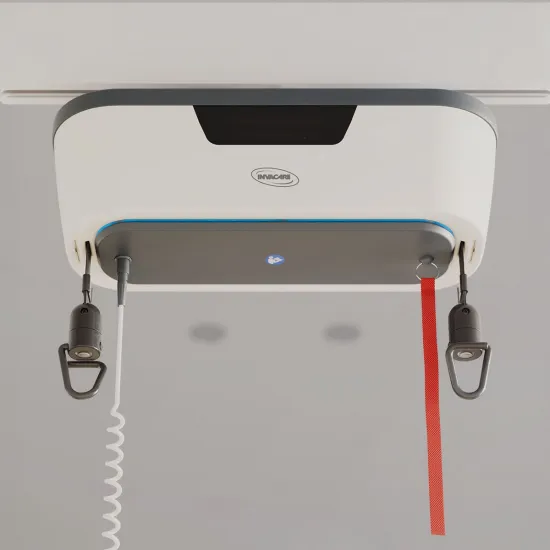
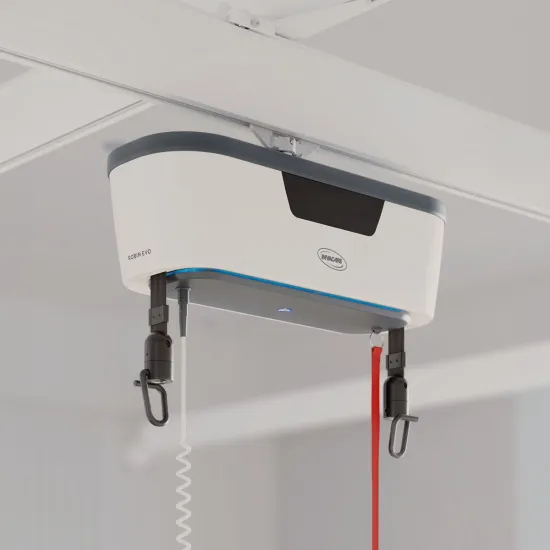
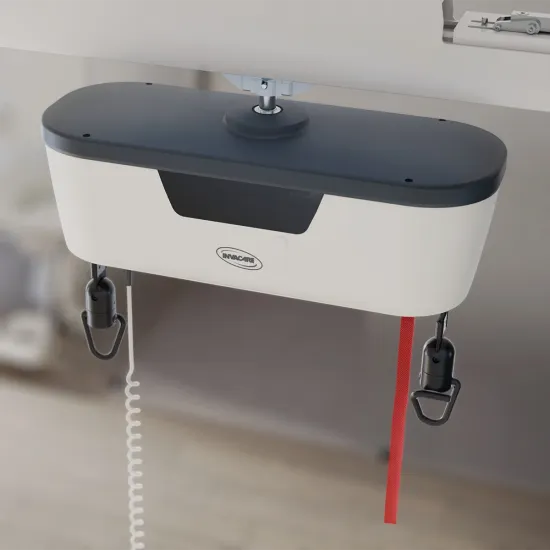
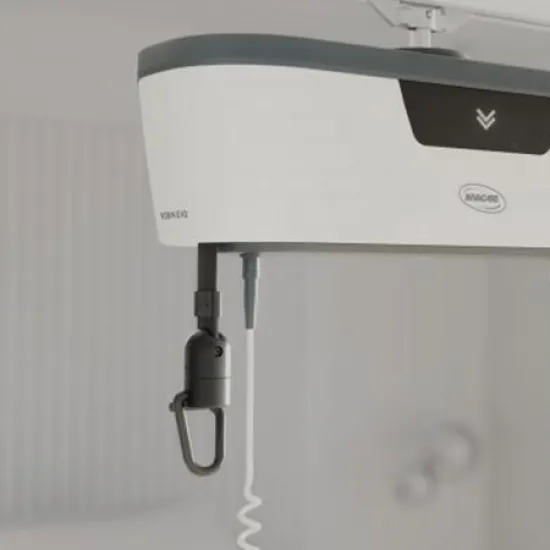
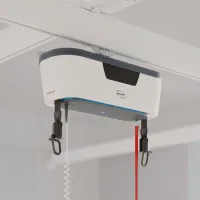
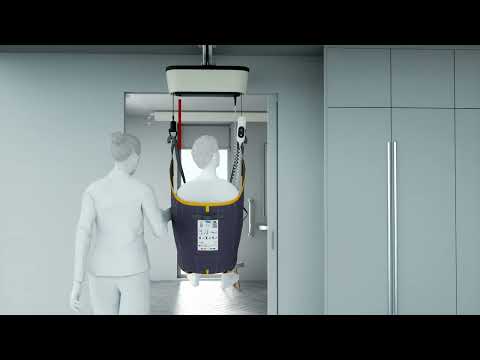
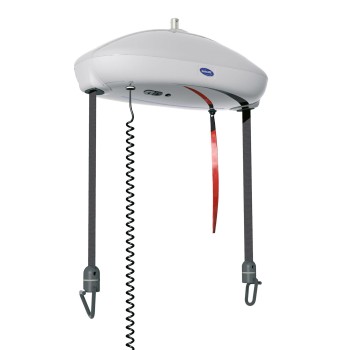
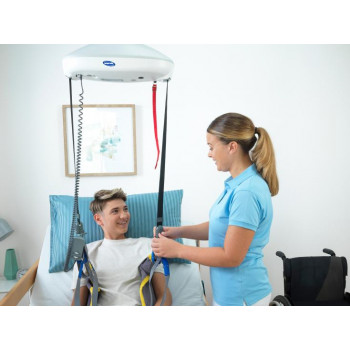
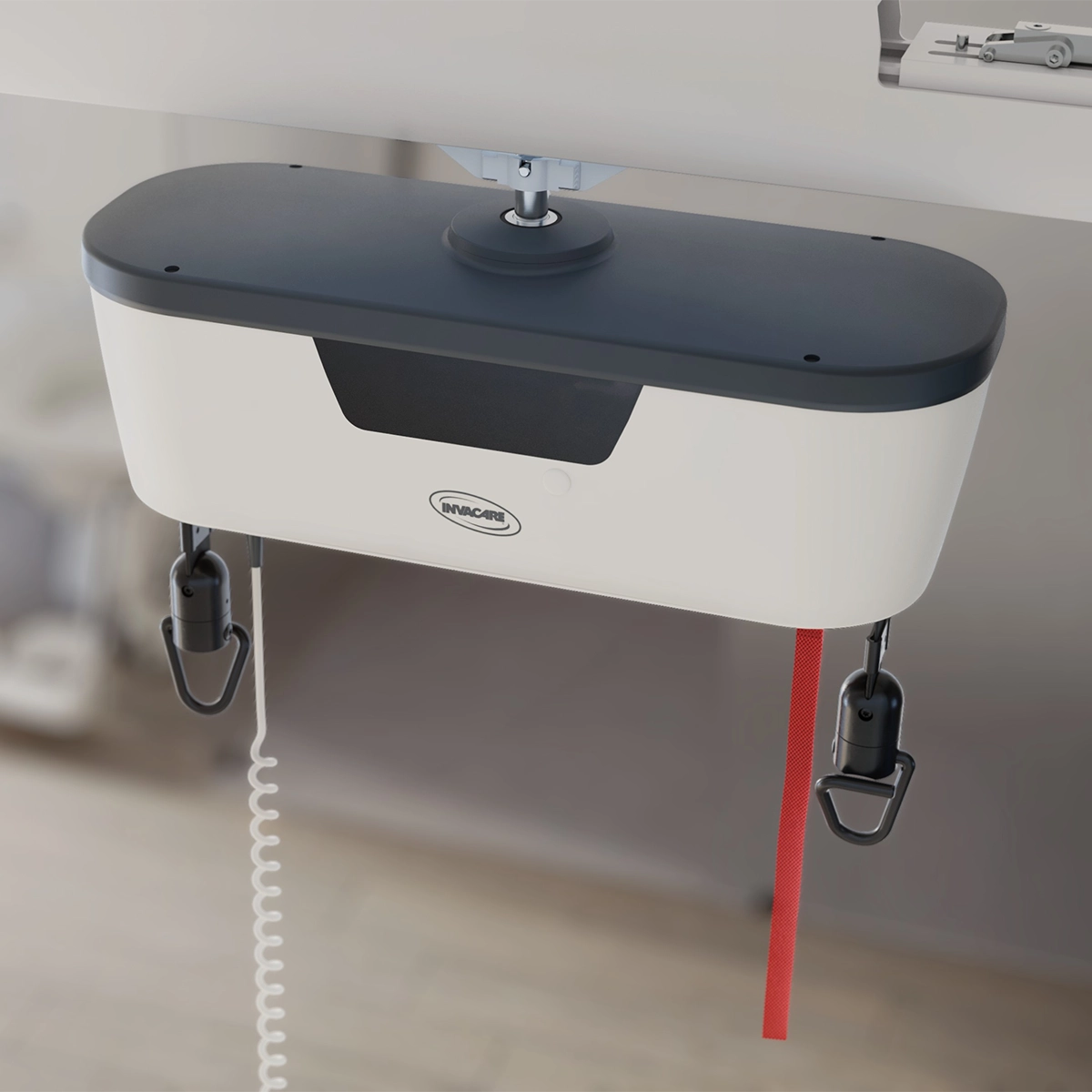
Invacare Robin® platform, the Robin® EVO reimagines what a ceiling hoist can offer. Its patented 2-strap concept removes the need for a spreader bar, placing the patient and carer face-to-face throughout every transfer — fostering communication, reducing anxiety, and delivering a more dignified experience for everyone involved.
Designed specifically for patients classified at mobility levels D and E under MK5's LOCOmotion classification (Knibbe & Knibbe), the Robin® EVO is the ideal solution for individuals who require full caregiver support. Whether deployed in the family home, a supported living environment, or a residential care facility, it adapts to the spaces and routines of modern care without compromise.
200 kg Safe Working Load | ISO 10535:2021 Compliant | Li-ion Battery | Single-Handed Care | Up to 90 Lifts Per Charge.
Key Features
Every element of the Robin® EVO has been developed with a clear purpose — to make transfers safer, smoother, and more reassuring for both the person being hoisted and the carer performing the procedure.
Patented 2-Strap Concept
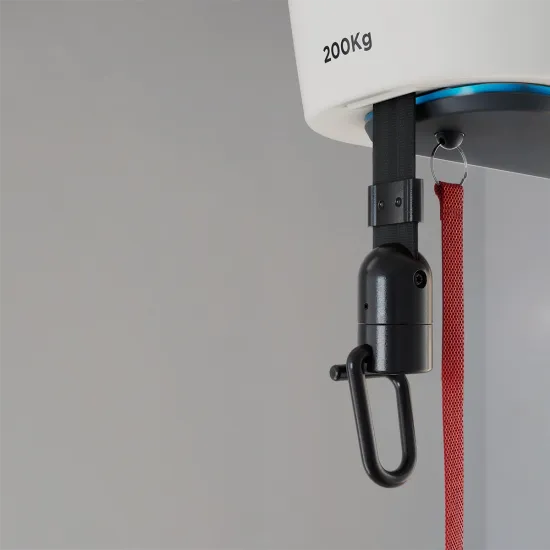
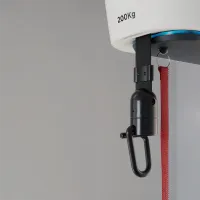
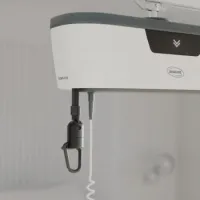
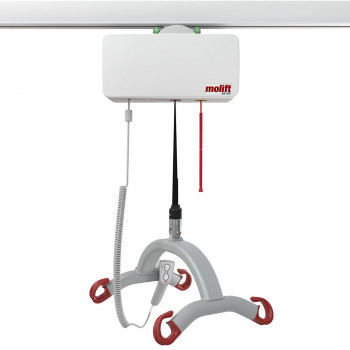
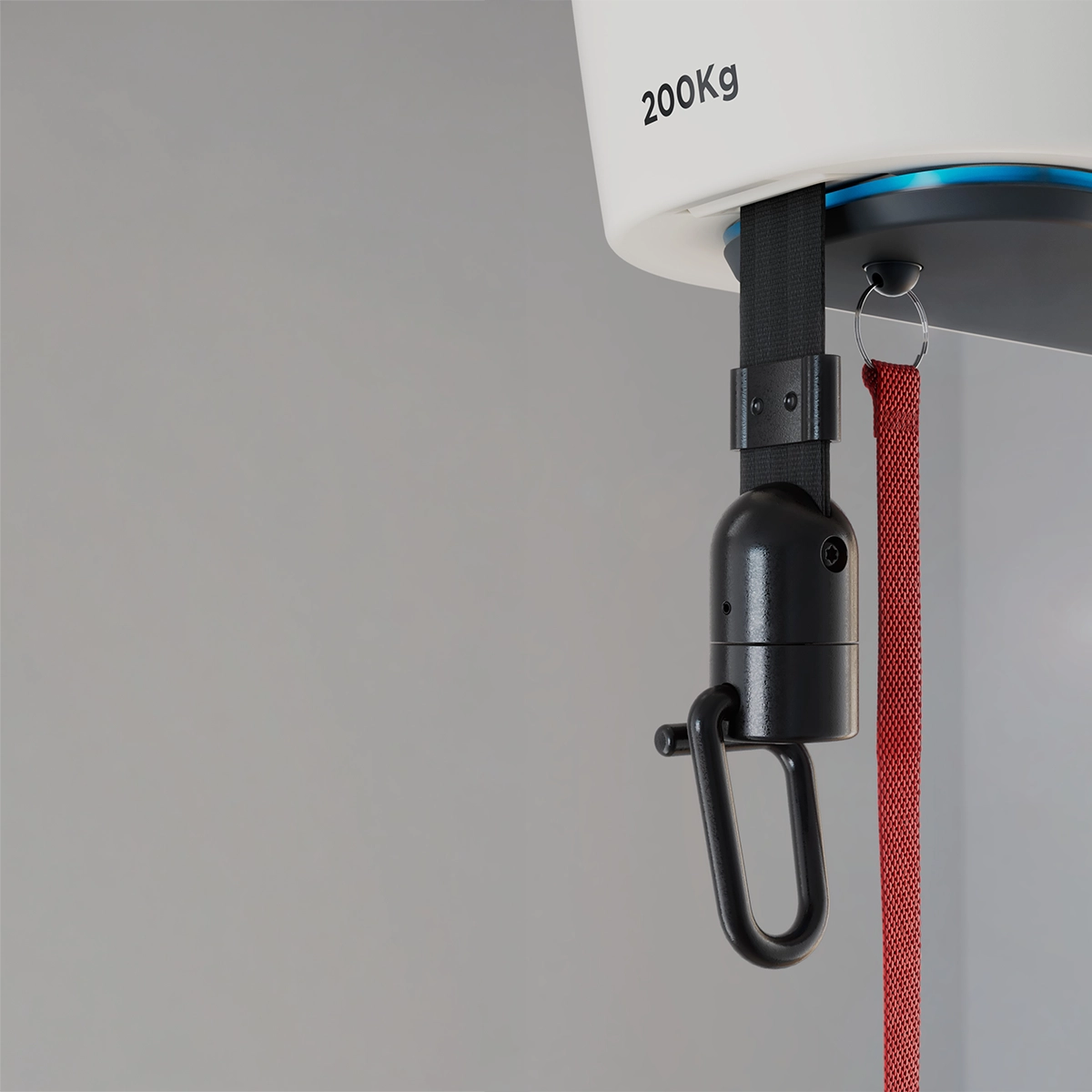
The 2-strap system (patent pending) replaces the traditional spreader bar, providing maximum stability and comfort while keeping the patient and carer facing each other throughout the lift. Weighted tension hooks secure sling straps firmly in place, making attachment quick and reliable.
LED Display & Operating Lights
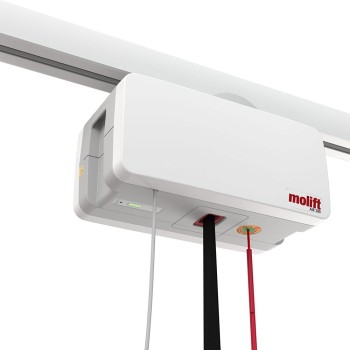
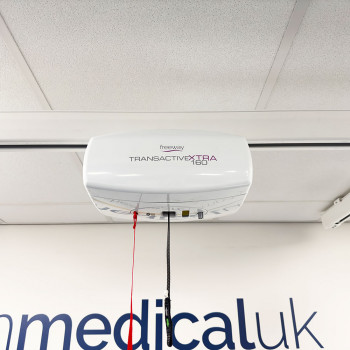
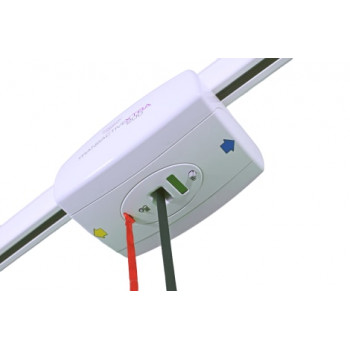
A clear LED display signals operation icons and error codes, giving carers instant troubleshooting feedback. Blue operational lights glow during active use, providing a visible at-a-glance status indicator for busy care environments.
Long-Life Li-ion Battery
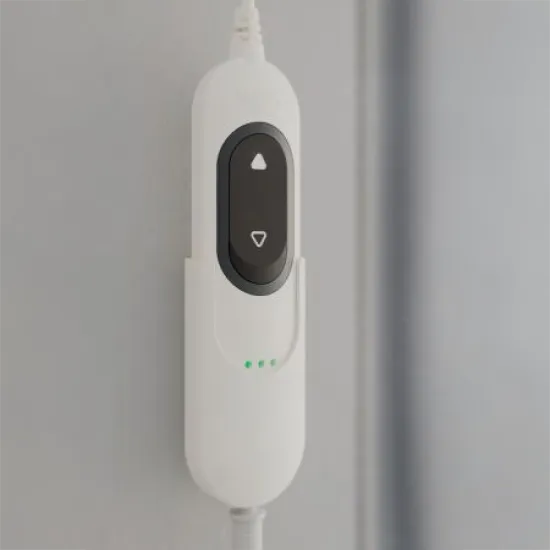
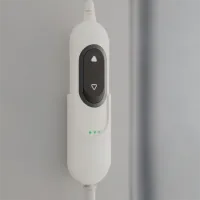
Powered by a 24V DC lithium-ion battery, the Robin® EVO delivers approximately 90 lifts per charge (based on an 80 kg user, 0.5 m up/down), with a 3-LED battery level indicator ensuring carers are never caught short. The magnetic hand control fixes securely to the unit for easy storage between uses.
Impressive Lifting Speeds
The motor achieves a lifting speed of 4.2 cm/s without load and 3.7 cm/s at full capacity of 200 kg — keeping transfers fluid, smooth, and free from jarring movement that can unsettle patients.
Emergency Lowering
Safety is never an afterthought. The Robin® EVO features both an emergency pull cord and mechanical lowering capability alongside the standard electrical operation, ensuring the patient can always be safely lowered in the event of a power or electrical fault.
Compatible Invacare Slings
The Robin® EVO pairs seamlessly with Invacare's full sling range — 13 models, available in up to six sizes and three fabric options — so every patient, regardless of body shape or care need, can be transferred comfortably, safely, and with dignity.
Benefits for Carers & Patients
Enables Single-Handed Care
Transfer procedures to be performed safely by one carer, reducing staffing pressures without compromising safety standards or patient dignity.
Protects Carer Wellbeing
Multiple studies confirm that ceiling hoists significantly reduce the static musculoskeletal load on carers. The Robin® EVO helps create a safer, more sustainable working environment — reducing the risk of injury during manual handling.
Promotes Positive Interaction
By maintaining eye contact during transfers, the 2-strap design supports communication, reduces patient anxiety, builds trust, and promotes compliance — making every transfer a more positive experience.
Upholds Patient Dignity
Without a spreader bar, patients feel less restricted and more connected throughout the transfer. Greater engagement and comfort help maintain a person's sense of dignity and self-worth during what can otherwise feel like a vulnerable procedure.
Versatile Across Settings
Suitable for home care, supported living, and residential care facilities alike, the Robin® EVO integrates naturally into a wide variety of environments and daily care routines.
Easy Troubleshooting
The LED error code display allows carers to quickly identify and resolve issues without specialist technical knowledge, minimising downtime and disruption to care schedules.