
Stand Aids Explained: Who They Suit and When They Are Not Appropriate

Are you someone who struggles with mobility or the carer of an individual with mobility issues? A common problem that you’ll be all too familiar with is the difficulty of taking an individual with limited mobility from a seated to a standing position.
Transferring from seated to standing can be difficult and time-consuming, and it also carries a risk of falls, which can further harm someone already struggling with weakness or immobility.
At Enable Living, we have worked with an array of individuals with a spectrum of mobility issues, and we know firsthand how common the challenge of moving from sitting to standing is, and we are happy to be providers of stand aids.
What is a Stand Aid?
A stand aid is a mobility aid that can be mechanical or powered. They're designed to safely move people who struggle with their mobility from a seated to standing position, supporting balance issues and helping to reduce fall risks.
Unlike full-body patient hoists, stand aids require the user to have some lower- and upper-body strength to use them.

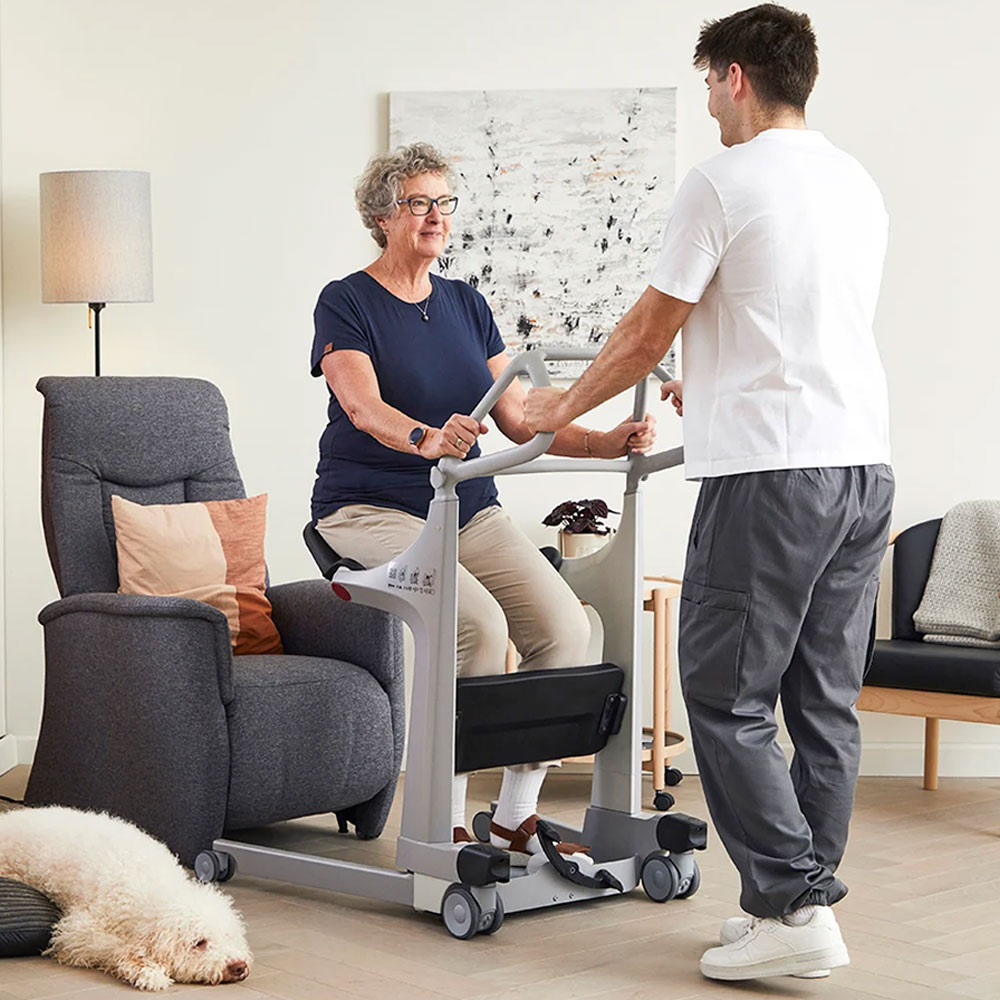
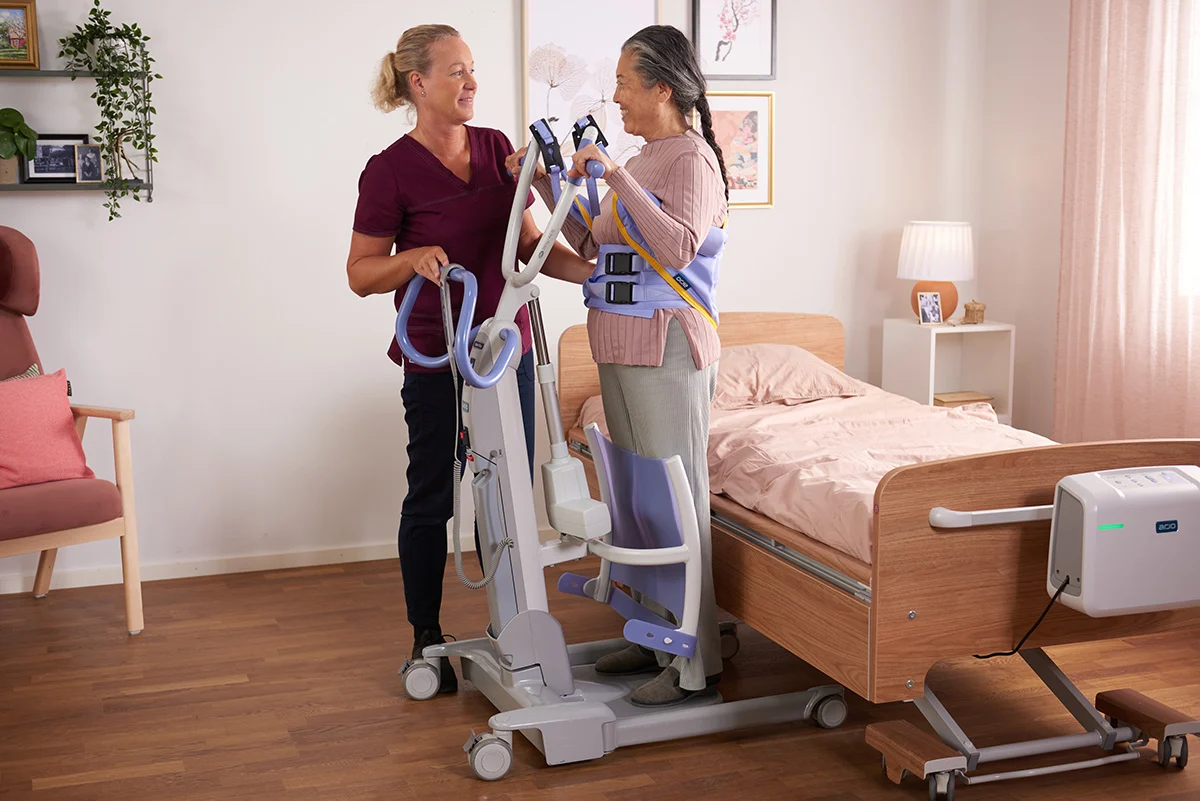
Their design provides knee and shin support, allowing the user’s legs to remain stable during the transition from seated to standing and vice versa. There's also a footplate and wheeled base, which allows caregivers to roll the device and use it across rooms.
For anyone with limited mobility, this kind of support can mean far more independence, while also helping prevent falls for elderly users.
Types of Stand Aids
Stand aids come in different types, each designed to meet different needs.
Manual Stand Aids
Manual stand aids are non-powered mobility and transfer devices that require no electrical or battery-powered motors and instead rely on the user’s upper-body strength, grip, and lower-limb stability to push and pull themselves up.
Powered Sit-to-Stand Hoists/Standing Hoists
Powered stand aids are battery-powered devices that are controlled with a hand-held remote. These hoists gently raise and lower users through a specialised support sling and are designed to help individuals who struggle to pull themselves up independently but can still stand briefly during the lift.
Standing Frames and Rails
Standing frames and rails are assistive medical devices designed to help those with limited mobility safely rise to, or maintain, an upright position.
These stationary structures provide full support and are used by individuals with enough upper-body strength to push themselves up from their seats. Using these frames and rails requires you to be able to at least partially support your body weight and push yourself into an upright position.
Who Are Stand Aids Suitable For?
Stand aids are suitable for those who still have some weight-bearing ability but still need support to move safely from a seated to a standing position. Users must be able to support a portion of their own body weight and, depending on the stand aid used, have enough grip strength to stabilise themselves.
When Is a Stand Aid Not Appropriate?
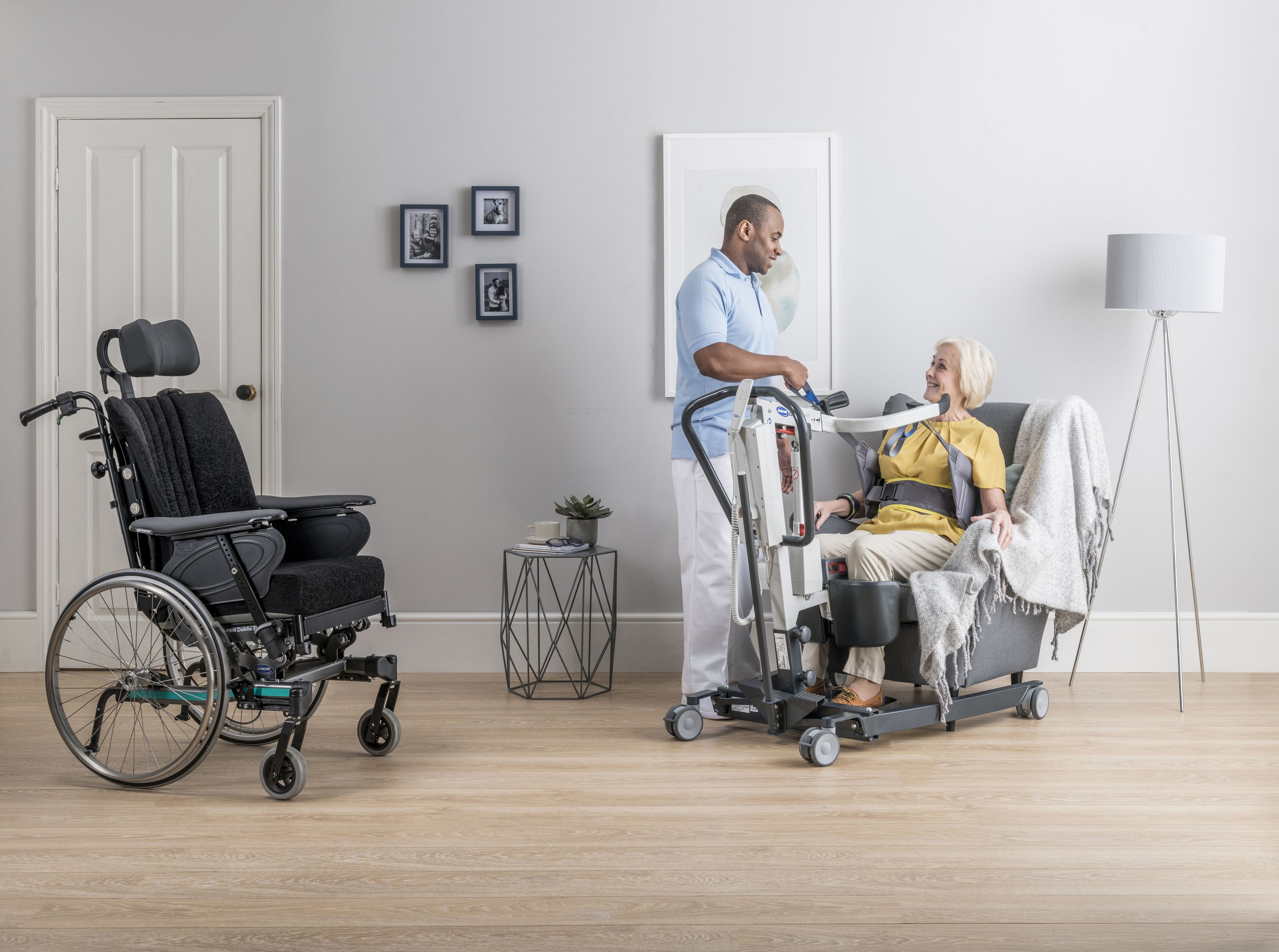
Stand aids are not suitable for patients with no mobility or who cannot bear weight. To use stand aids, the user must be able to put weight on their legs; if they can't, they may need a full-body hoist instead of a stand aid.
Stand Aid vs Full Hoist: Which is Right?
Whether a stand aid or full hoist is the right option depends entirely on the individual. Full body hoists are recommended for anyone who cannot bear any weight on their legs or comfortably use their upper body strength to lift themselves out of a seated position.

Those who use a full hoist are often completely immobile or older individuals experiencing age-related muscle weakness that prevents them from standing comfortably.
Stand aids are recommended for those who still have some mobility and can bear weight on their upper body and legs.
Getting the Right Assessment
Before you consider purchasing any standing aids, consult an occupational therapist or physiotherapist. They can assess you, help you understand your current physical ability, and outline the type of equipment that best suits your needs. They can also help you determine if you are eligible for any grants to help pay for the equipment.
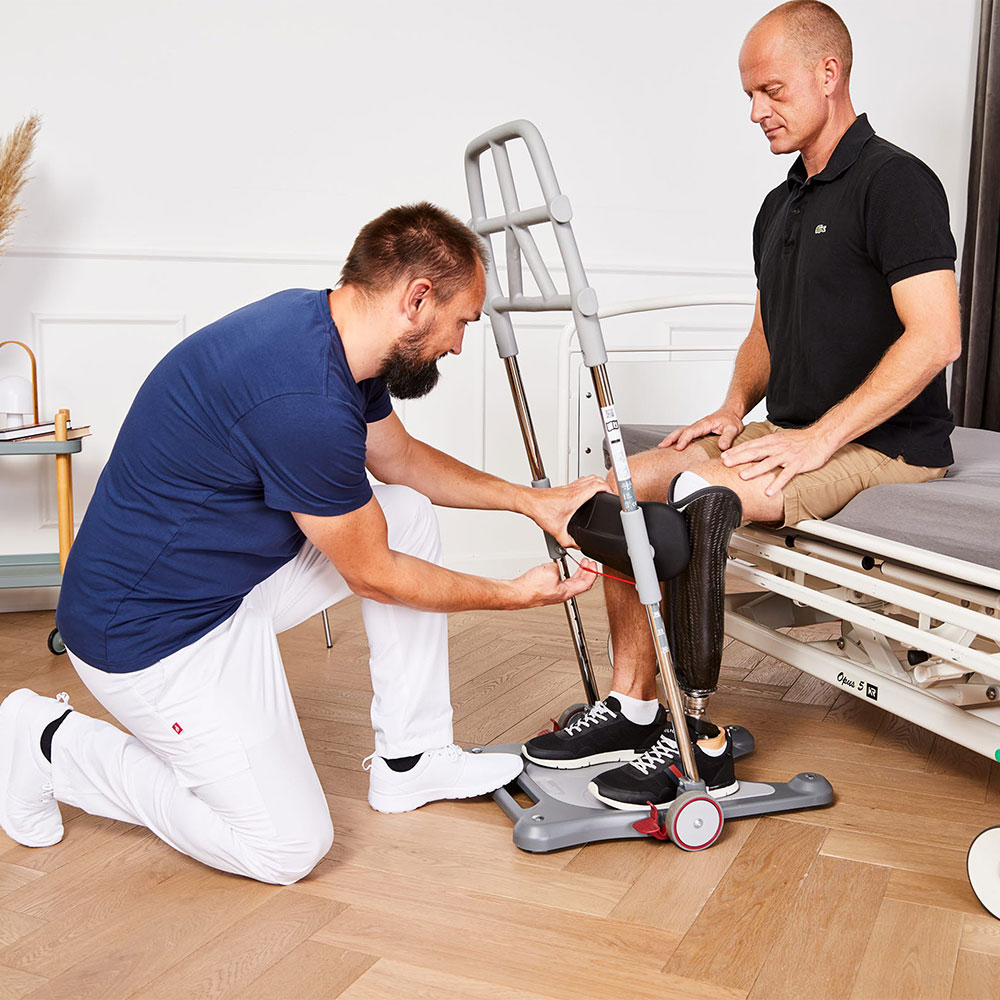
A formal assessment will also tell you whether you need carer support, and it will advise you on what may happen if you get specific stand aids, such as the need for training to use the equipment and regular servicing. Powered stand aids used in a care setting, or by paid carers, also need a LOLER inspection every six months.
Safety Tips for Using a Stand Aid
If you decide that using a stand aid is the right solution for you, keep these safety tips in mind.
Check Brakes
Having you or your carer check the brakes before using your stand aid is crucial to safe use. If your brakes aren’t working or are left unlocked during a transfer, the stand aid can roll or slide as the user tries to stand, causing them to lose balance and fall and potentially injure themselves.
Correct Sling or Strap Fit
Before you use your standing aid, if it has a sling or strap to keep you secure, make sure the sling and waist strap fit comfortably. If they are too tight, they can cause discomfort or skin tears; if they’re too loose, the user may slide out of the equipment during the lift, which can lead to injury.
Check Feet Positioning
Many people neglect foot positioning and how important it is for safe use of standing aids. If your feet are too far forward or back, it can make it difficult to bear your weight and could cause you to slip off the support pads.
Never Rush
Never rush when using a standing aid, as doing so can increase fall risks or cause you to miss vital mechanical checks. Before using the equipment, take a deep breath and ease yourself into it.
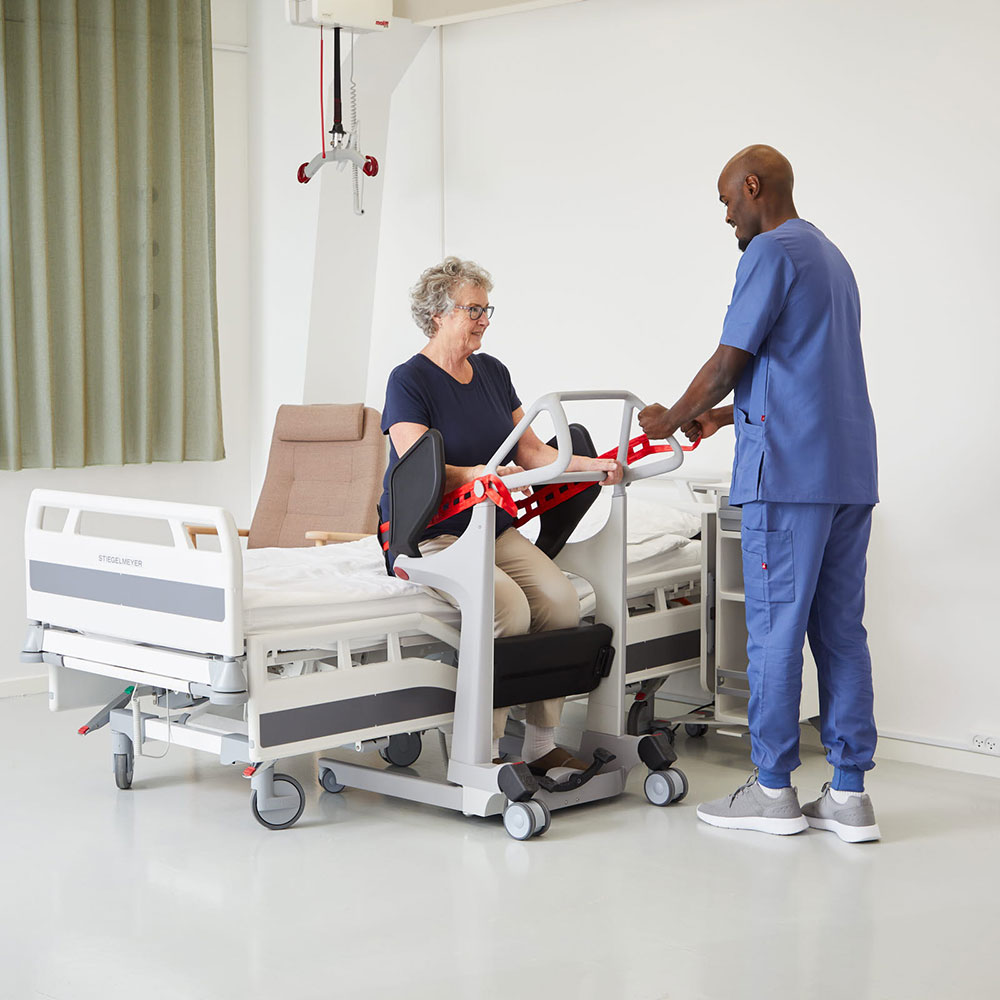
If you’re assisting someone who needs to use the equipment, take your time helping them out of their seated position and into the standing aid.
Find the Right Standing Aids With Enable Living
You should now know everything you need to know about standing aids. At Enable Living, we stock a range of standing aids designed to help you gain independence.
If you need your own standing aid or you want to learn more about the aids we have available, get in touch.
